Flying by Instrument and Managing by Insight
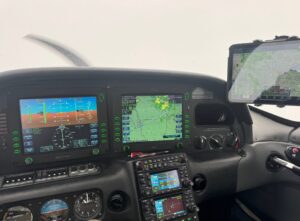
When you’re flying through the clouds, you can’t rely on what you see out the window. The horizon disappears, and the world outside becomes a white blur. In those moments, safety and success depend entirely on your instruments — systems designed to give you the right information, in the right way, at the right time.
At first, instrument flying can feel disorienting. But with the right training, equipment, and discipline, it becomes routine. Confidence grows not from instinct, but from knowing that the data in front of you tells the truth. That clarity empowers pilots to make decisions, adjust course, and reach their destination safely — even when the skies are challenging.
Business isn’t much different. Many leaders today are “flying in the clouds” — surrounded by complexity, reacting to turbulence, and relying on gut feel rather than grounded insight. The difference between anxiety and assurance lies in the quality of your instruments: your strategy, your processes, your measures, and your systems.
But before building dashboards or defining KPIs, there’s a crucial step: gaining Context.
True insight comes from stepping back to understand the landscape — the market, the strategy, the constraints, and the internal mechanics of how value is created. Leaders must pause to ask:
• What’s really driving outcomes in this business?
• Which levers matter most — and are they within our control?
• How well do we understand the relationships between inputs and results?
• Where are we guessing — and where do we actually have data we trust?
• Are we measuring what matters, or just what’s easy to track?
By taking this step, leaders can avoid the trap of managing by noise. Instead of overwhelming teams with dozens of metrics, they can focus on a critical few that reflect true performance and guide meaningful action.
In my work, I’ve helped organizations architect their “flight deck” — designing information flows, dashboards, and reviews that support better decisions. That doesn’t just mean visualizing data. It means aligning metrics to strategy, clarifying roles, and ensuring everyone knows how their decisions impact outcomes.
Just as the aviation community has refined decades of instrument-flight procedures to make flying safer and more predictable, organizations must design how insight is gathered, shared, and acted on.
Because, whether in the cockpit or the boardroom, success depends on clarity, confidence, and alignment.
If you feel like you’re flying blind, let’s talk.